
hold the newsreader’s nose squarely, waiter / or ‘why chess is not as complicated as you think’
There is an interesting numerical fact that often crops up in conversations about chess: there are more possible chess positions than there are atoms in the observable universe. It is usually advanced by the chess players themselves, whose egos stand to benefit from reinforcing the game’s enduring image as an elusive art reserved only for the intellectually gifted. I am sure of this because I have been occasionally guilty of it. And if that fact were not already striking enough, I recently stumbled upon an even more preposterous variation: If every atom in the observable universe had been playing chess continuously since the Big Bang, completing a new game every second, they would still not have exhausted all possible outcomes.
The American polymath and ‘Father of Information Theory’, Claude Shannon, once estimated the game-tree complexity at roughly 10^120. To appreciate just how quickly the numbers explode, consider the opening. From the first move, White has twenty legal moves. By the time Black replies, there are four hundred possible games. By the second move this figure escapes into the hundreds of thousands. By move three: one hundred and twenty million.
Impressed yet? Yes, well… it’s about as mind-boggling as it is misleading.
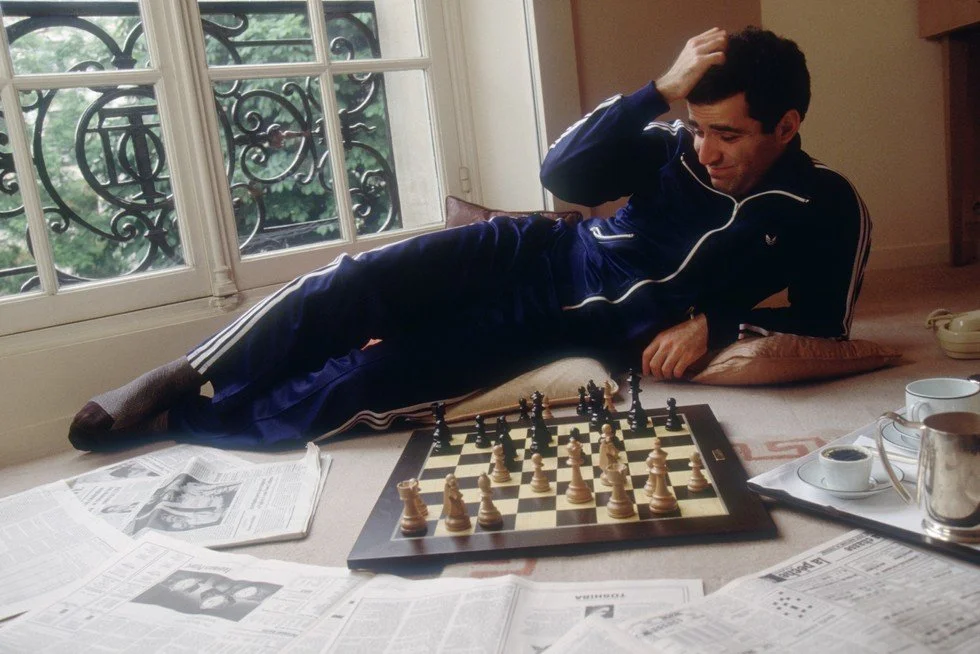
The problem I have with these numbers is not how they flatter the mathematics. It’s how they invite us to mistake combinatorial complexity for the type of complexity chess players actually care about. The richness of chess lies not in the number of configurations allowed, but in the tiny fraction of them that mean something. That is, in its semantic complexity.
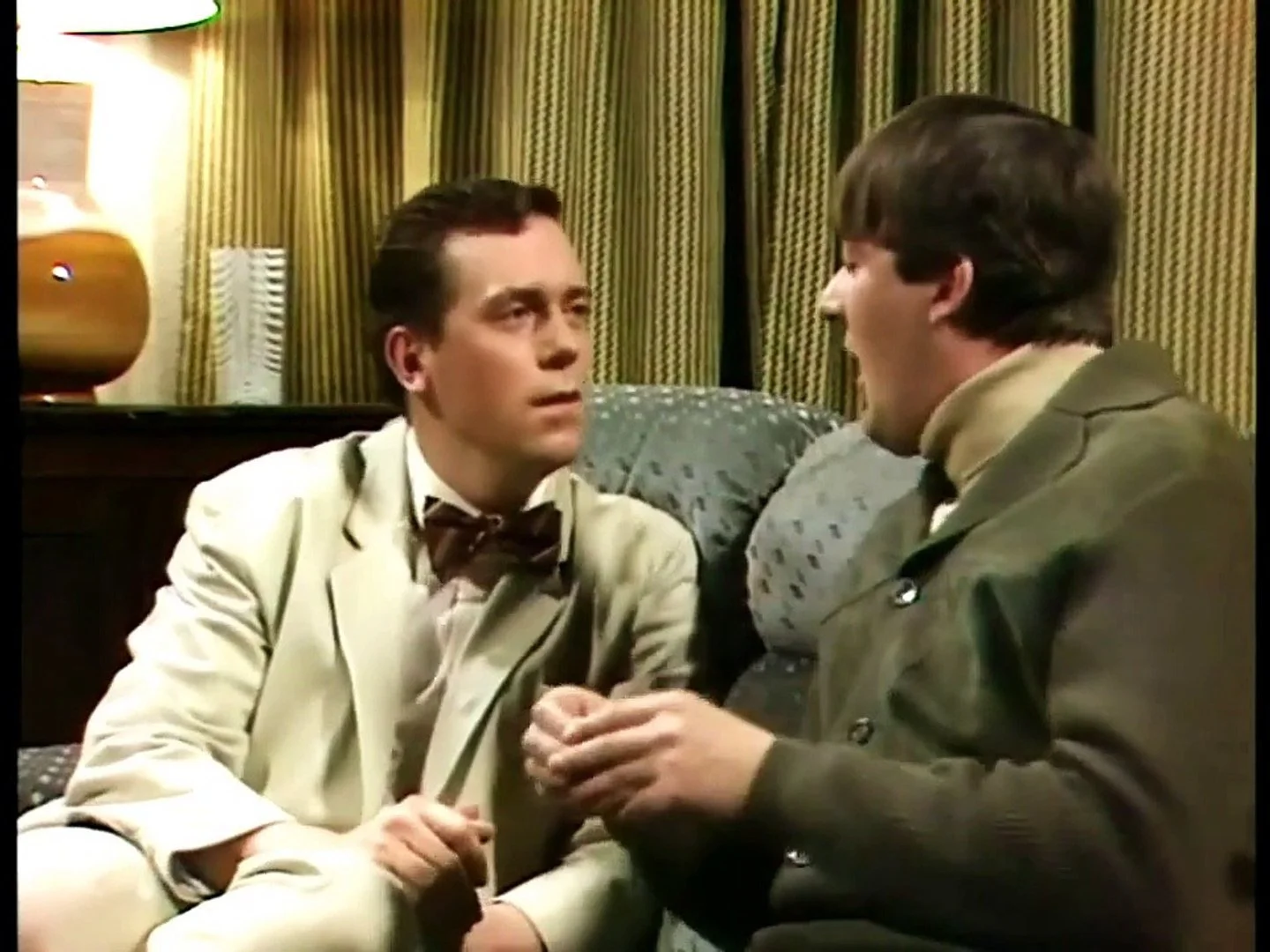
In one of my favourite comedic sketches from A Bit of Fry and Laurie, Stephen Fry plays an eccentric linguaphile who has this to say about language:
‘Language. Hundreds of thousands of available words. Frillions of legitimate new ideas. So that I can say the following sentence and be utterly sure that nobody has ever said it before in the history of human communication: Hold the newsreader’s nose squarely, waiter, or friendly milk will countermand my trousers. Perfectly ordinary words. But never before put in that precise order.’
There is language, and there is speech; there are notes, and there is music; there is chess, and there is the game of chess.
When I lived in London, I used to help organise Four Corner, one of the city’s largest and most vibrant outdoor chess communities. Players of all ages and abilities—complete beginners to internationally recognised masters like Anna Cramling and David Howell—would flock to St John’s Square on a Saturday afternoon or Granary Square on a Wednesday evening to test their skills against each other.
One day my wife came along to spectate. As I was pacing up and down the boards, assessing the relative quality of the games, sizing up potential opponents, and pointing out who looked particularly strong, she asked me ‘How can you tell who is an experienced player just from glancing at a static position?’ It was a great question. The answer: good chess is as beautiful music sounds.
Before an experienced player calculates a sequence of moves, they scan the board for recognisable patterns. An acquired grammar communicates the general key of a position, the genre into which it falls, and so the player understands roughly how the next phrase ought to sound even before they discover the exact notes with which to construct it. New players lack such a grammar. They play as a three-year-old might play the violin. Their moves are—as my old music teacher used to say—enthusiastic, energetic, but wrong!
‘We’re talking about language.’
Chess is brimming with rules and principles which prune game-tree complexity dramatically. It comes as a surprise to many of my students who are just starting out on their chess journeys to learn that two moves account for the overwhelming majority of chess games: 1.e4 and 1.d4. Hundreds of thousands of games are played every day on online servers and yet 70-80% of them begin this way. Just as the beginning of a sentence demands a capital letter, the opening of a chess game demands that players fight to control the centre, develop their pieces smoothly, and castle quickly. Just as the letters I am choosing to type on my keyboard obey the sense of what I am trying to convey, moves made by proficient players obey the grain of a broader idea. What a player chooses to ignore is almost as important as what they choose to play.
Vast quantities of ‘opening theory’ and ‘solved endgames’ exist not so that players can become mindless automatons, merely shadowing the latest chess engines, but so that they can approach the fog of war equipped with some kind of map. Chess players are always reaching for Ariadne’s thread, always trying to reduce complexity to its known elements. When shown a real-game set up for just five seconds, a master can typically recall the position of around 16 to 22 pieces correctly, whereas a beginner remembers only 4. When shown a completely random position, however, the master’s recall drops to the level of the novice.
‘Hold the newsreader’s nose squarely, waiter, or friendly milk will countermand my trousers’ this arrangement of words is available to us even when the sense is not: it is semantic rubble. Real-game structures are like familiar neighbourhoods. And semantic complexity, the basis upon which the true difficulty of chess rests, is at its greatest just as a player thinks they have arrived in a recognisable suburb, only to find their opponent is busy warping it out of shape. As former world champion Mikhail Tal put it, ‘You must take your opponent into a deep dark forest where 2+2=5 and the path leading out is only wide enough for one.’
Yes, chess is complicated. Just maybe not as complicated as you thought it was.